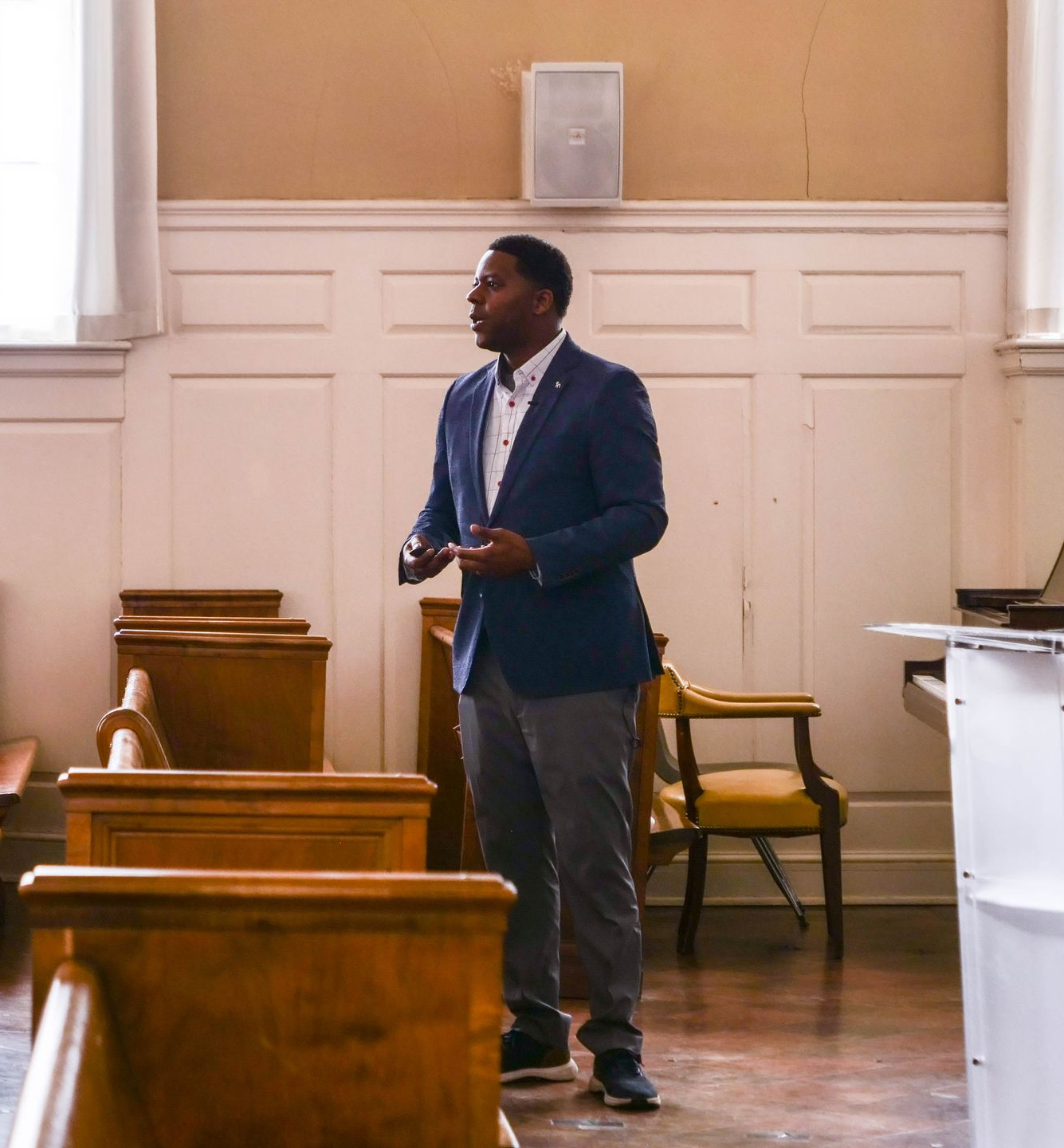

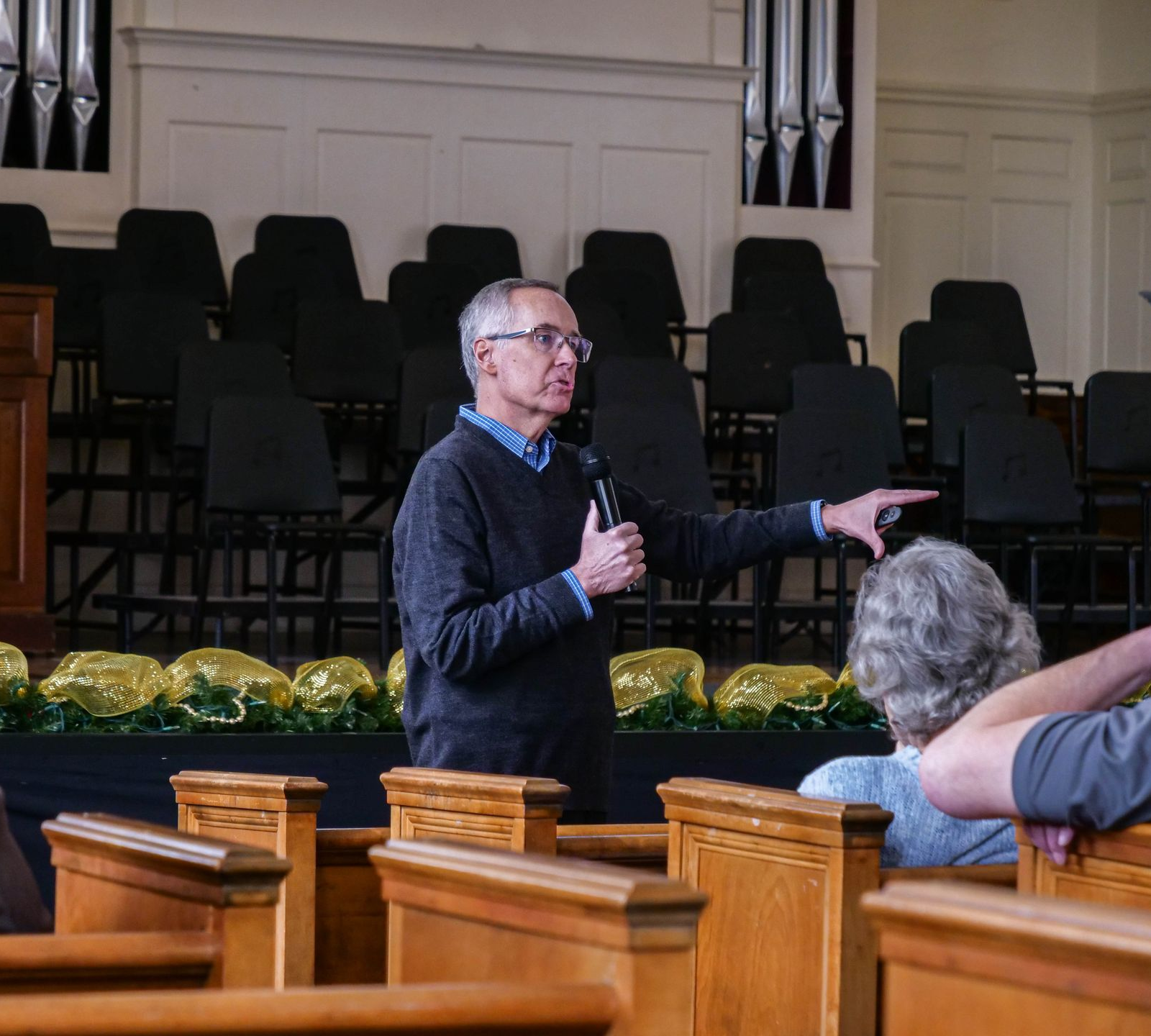
On February 25, 2026, Union Commonwealth University hosted its State of Union Town Hall, bringing together faculty and staff in two dedicated sessions at Conway Boatman Chapel to discuss the university’s financial realities, strategic direction, and long-term sustainability.
Many of these topics centered on national challenges facing higher education, UCU’s recent financial adjustments, and a forward-looking initiative supported by
Rize Education and a Google-funded College of the Future grant.
The first half of the event focused on faculty, with Dr. Joshua Wilkey, Provost and Vice President of Academic Affairs, and College of the Future Implementation Lead Dr. Bob Helmer highlighting both the opportunities and challenges facing the university. They framed Union’s work within the broader national landscape of higher education, noting declining enrollments, rising operational costs, and the increasing closure of small colleges nationwide. Helmer emphasized the urgency of addressing these challenges proactively, explaining that many institutions fail because they respond too slowly to shifts in the educational environment.
“Gradually, then suddenly,” Helmer said, “schools are closing, and the ones that are closing are the ones that do not have a sense of urgency.”
The second half of the event complemented the earlier discussion by focusing specifically on staff and the operational side of the university’s long-term sustainability. Dr. D.J. Washington, President of Union Commonwealth University, led the session, offering a candid update on the institution’s financial position and outlining goals for institutional growth in the coming fiscal years.
Washington noted that the university operated with significant deficits in recent years and now positioned to operate with a balanced budget in 2025–26, marking the first time in eight years that Union has avoided deficit spending and borrowing from its own endowment. Much of this progress is the result of strategic financial decisions, including the sale of the Aquatic Center, which provided a substantial opportunity to address past debt, and the continued support of alumni, generous donors and trustees funding key campus initiatives.
“Our burden is behind us. We have stabilized our finances, eliminated operating deficits, and will continue to lead and operate in ways that are responsible, sustainable, and aligned with our mission,” Washington emphasized.
“Every single person who's a part of the Union community makes an impact on recruitment, retention, and persistence, on the success of the university,” Helmer said.